ความแตกต่างระหว่างการเชื่อมต่อแบบยาวและแบบขวาง
News Details
ในการผลิตโลหะทุกข้อต่อจะมีจุดประสงค์เฉพาะ เมื่อคุณสร้างท่อภาชนะ耐圧ถังหรือคานโครงสร้างทิศทางของเส้นเชื่อมร焊接จะส่งผลโดยตรงต่อความแข็งแรงของผลิตภัณฑ์สุดท้าย สองรูปแบบการวางเชื่อมร焊接ที่พบบ่อยที่สุดคือเชื่อมร纵向และเชื่อมร横向
แม้ว่าทั้งสองข้อต่อจะยึดชิ้นโลหะเข้าด้วยกัน แต่它们จัดการแรงความเค้นและวิธีการผลิตในรูปแบบที่แตกต่างกันอย่างสิ้นเชิง การเข้าใจความแตกต่างเหล่านี้ช่วยให้คุณเลือกวิธีการและเครื่องจักรที่เหมาะสมสำหรับโรงงานของคุณ
What is a Longitudinal Weld?
Before comparing the two types, it helps to start with a clear definition: What is a longitudinal weld?
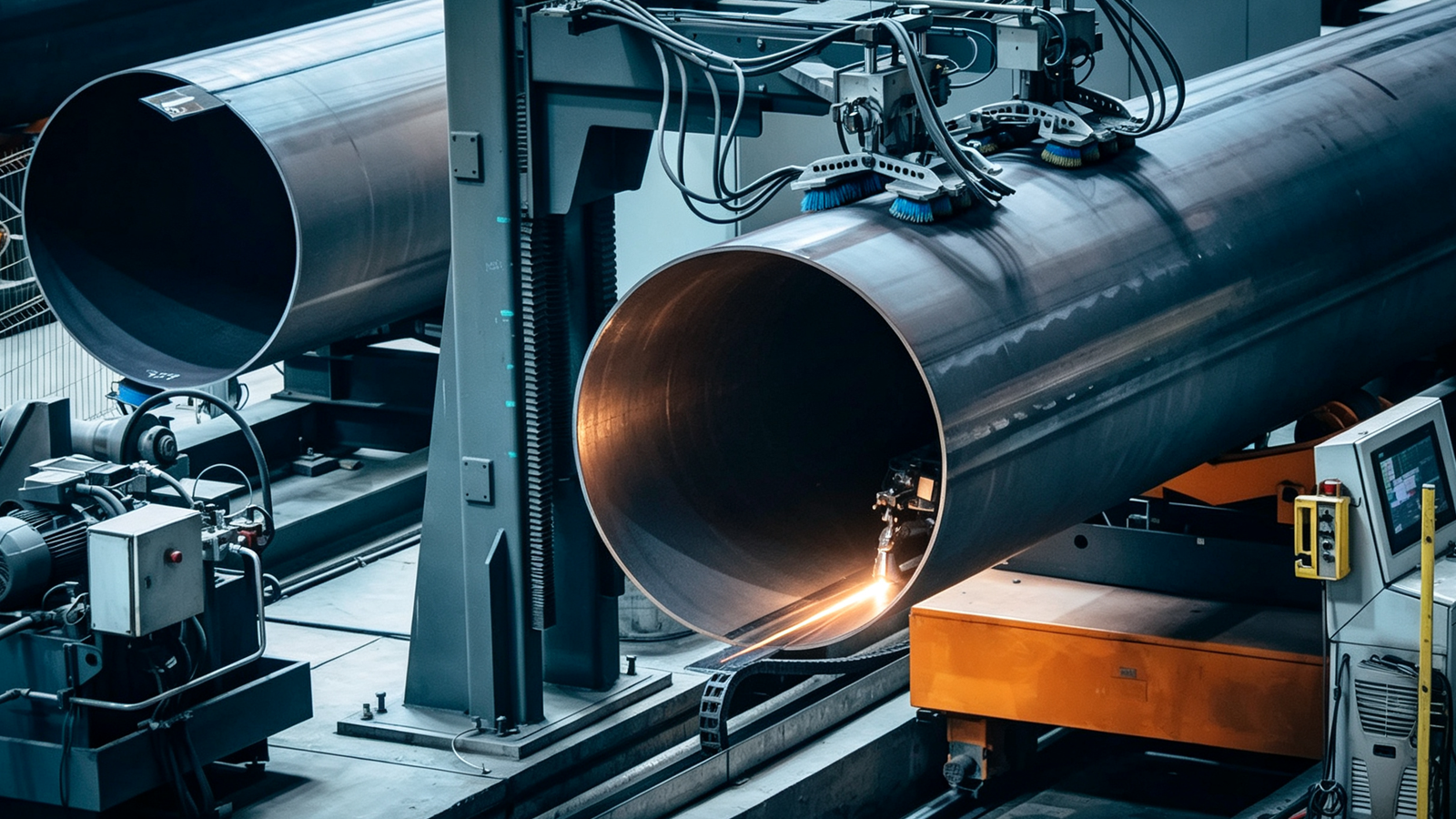
A longitudinal weld is a straight weld joint that runs parallel to the main length or axis of a part. For example, when flat sheet metal is rolled into a round pipe or tank shell, the two long edges meet in a straight line. Joining those edges creates a longitudinal seam.
Because this joint runs the full length of the workpiece, consistency is critical. Modern shops use specialized longitudinal seam welders to perform this task automatically. These machines clamp the plate flat and guide the torch along the joint at a steady speed. This automatic control prevents heat warping and delivers clean, leak-tight results.
What is a Transverse Weld?
In contrast, a transverse weld runs perpendicular to the main axis or length of the part. Instead of running down the long side of a tube, a transverse weld goes across or around it.
For instance, when two separate pipe sections are joined end-to-end, the ring-shaped weld connecting them is a transverse weld (often called a girth weld or circumferential weld). On flat plates or structural I-beams, any weld that cuts across the direction of primary tensile stress is also considered a transverse weld.
3 Key Differences Between Longitudinal and Transverse Welds
While both weld types join metal components, they differ in several important ways:
1. Orientation and Layout
-
Longitudinal seam: Follows the long axis of the cylinder or plate.
-
Transverse seam: Crosses perpendicular to the main length or wraps around the circumference.
2. Stress Distribution and Pressure Resistance
In pressurized pipes and tanks, internal fluid pressure creates two types of force: hoop stress (which tries to burst the pipe sideways) and axial stress (which tries to pull the pipe apart lengthwise).
Hoop stress is twice as strong as axial stress. Because a longitudinal weld bears the brunt of this high hoop stress, it must meet strict quality standards to prevent leaks or failure.
3. Equipment and Manufacturing Process
-
Longitudinal welds: Usually require dedicated longitudinal seam welders. The workpiece remains stationary while an automated carriage drives the torch down the seam.
-
Transverse welds: Often rely on rotary positioners or circumferential welding lathes, where the torch stays stationary while the cylindrical part rotates underneath it.
How to Choose the Right Seam Welding Equipment
To produce strong, reliable welds, matching your workflow to the right machinery is essential. If your shop handles tanks, tubes, or sheet metal boxes, investing in a high-performance seam welding machine simplifies your daily operations.
Automated clamping systems hold raw metal firmly against copper backing bars. This setup cools the joint quickly and produces clean root passes without burn-through.
If you plan to expand your production capacity, searching for a reliable longitudinal seam welder for sale from an experienced supplier like 聚创 ensures you receive durable equipment with user-friendly digital controls.
Summary
Choosing between a longitudinal and a transverse weld depends on your part geometry and force requirements. While transverse welds connect sections end-to-end, longitudinal welds turn flat metal sheets into solid, airtight cylinders.
Using automated seam welders for both processes keeps your labor costs low, improves weld consistency, and ensures every joint withstands heavy industrial use.


